
DgineAI
Agentic AI for utility distribution design.
DgineAI operationalizes the utility engineering knowledge SVG built through years of consulting and engineering delivery. It is not a general AI product fitted with a utility prompt — it is our own design practice, running as software. AI-assisted Distribution Planning and Engineering results in:
Based on years of designing electric distribution work orders, we built an agentic AI platform that automates distribution planning — creating efficiency and significant cost savings for utilities facing a growing capital work order backlog and a scarcity of skilled resources.
DgineAI ingests work order notifications from Utility work management systems and asset data from Utility enterprise asset management systems, pulls spatial context from GIS, applies SVG-curated design standards and compatible units, and produces a spatially georeferenced, standards-compliant draft design for engineer review — compressing a multi-week manual cycle into 24–72 hours.
Human-in-the-loop control is central. Every AI recommendation is reviewed and approved by the design engineer, and every correction feeds back to sharpen the model.
See use casesReads from
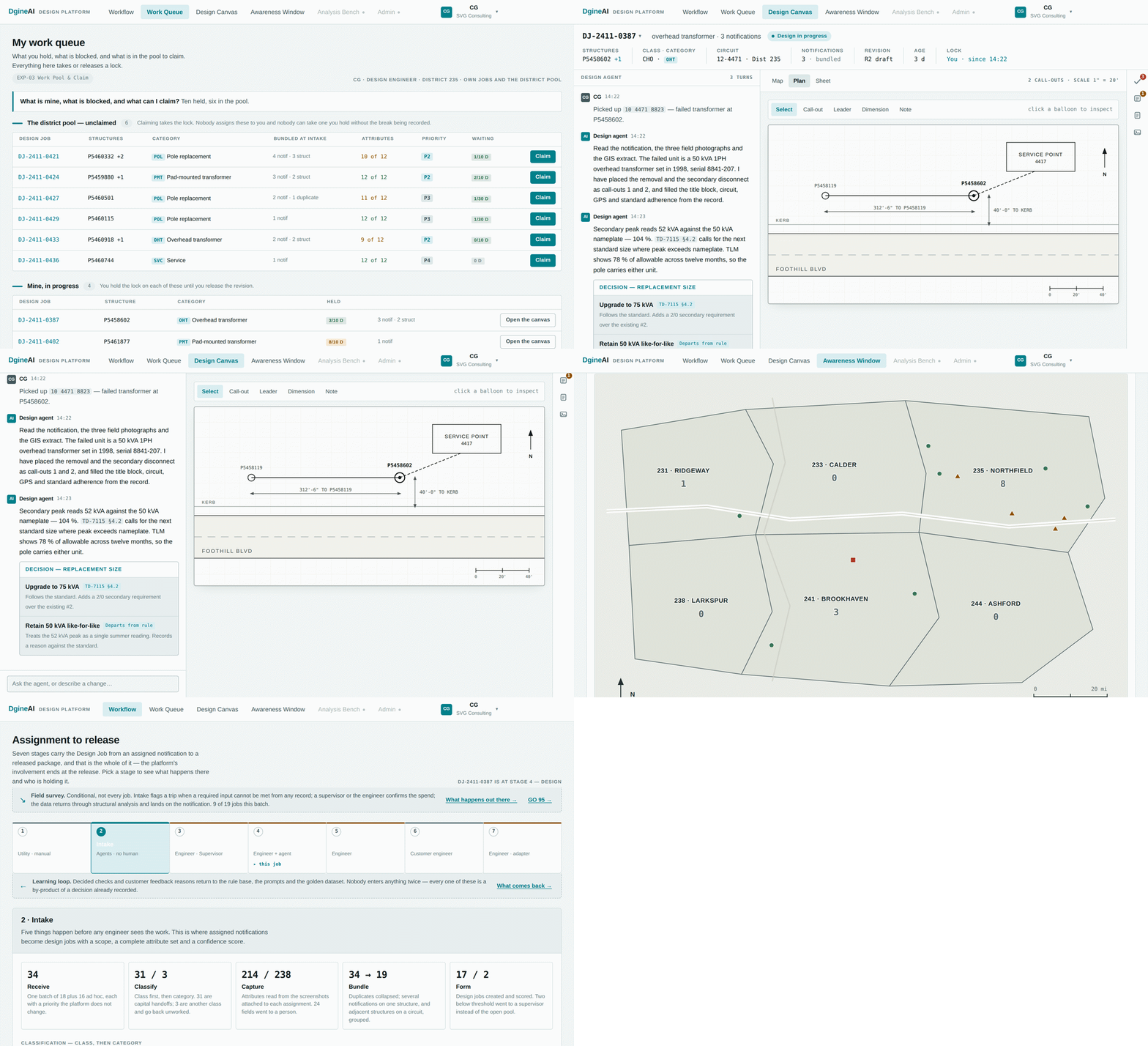
Swipe the frame to follow the full width of the platform.
How the platform is built
Domain-native, not adapted
Trained on SVG's own distribution design standards and compatible units. Not a general LLM fitted with a utility prompt.
Utility-controlled cloud deployment
Runs inside Utility's approved cloud environment under Utility identity controls, with a full audit trail of every AI decision. Customer data never reaches an external LLM.
Integrated with Utility's systems
Connectors for industry-standard platforms across Work Management, Enterprise Asset Management, Enterprise GIS, and Distribution Design via RESTful APIs — with a phased integration roadmap from file-based exchange to direct API.
How it works
From notification to approved design.
Five stages. The engineer holds authority at the one that matters.
Notification and asset data ingested
Notifications from Utility work management — API or PDF — are parsed automatically, while asset master data and attributes are read in parallel from the enterprise asset management system. Key fields and circuit references extracted with no manual re-keying.
GIS context pulled
The agent queries Utility GIS for circuit topology, existing assets, and spatial context around the work location, giving the canvas a spatially accurate foundation.
Draft design generated
Multi-agent reasoning applies SVG-curated design standards and compatible units to produce a draft aligned to regulatory and utility standards for the specific notification type.
Engineer reviews and approves
The design engineer reviews, edits, and approves. Nothing is issued without that approval, and every correction is captured to improve the model.
Published from the design record
Held inside DgineAI as a compatible design diagram, the approved design is released as industry drawing formats such as AutoCAD DWG, structured JSON, or secure services into Utility design workflows.
Security and responsible AI
Built for the controls a utility has to answer for.
DgineAI runs inside Utility's environment, under Utility's identity controls, with a design engineer holding final authority over everything produced.
How authority and accountability are held.
Where the platform runs and who can reach it.
ISO 27001 certification is in progress, with security controls monitored continuously through Vanta. Specific controls, retention periods, and deployment architecture are confirmed per engagement during the month-one security review. View SVG's Trust Center (opens in a new tab)
Use cases
Every notification type, designed for.
DgineAI is trained and in production today on the high-volume replacement notifications driving the capital backlog. The roadmap extends to higher-complexity planning work.
Trained and running now. An engineer approves every design before it is issued.
Pad-mount equipment replacement
Ground-level pad transformers, switchgear, and capacitor banks. Parses corrosive area flags and environmental remediation notes.
In productionPole-mount equipment replacement
Overhead transformer, switch, and capacitor bank swap. Selects compliant CUs and generates the overhead design sketch.
In productionPole replacement
Parses PLW survey sheets for height, class, subtype, and treatment; generates SPIDA input.
In productionSecondary changes
Network modifications downstream of the transformer — conductor, service drops, and splices.
In productionService notifications
Field-observation-driven notifications for service faults, meter base changes, and residential replacements.
In productionNot yet automated. The architecture supports these without re-engineering; each waits on design-standards curation for that work type.
Make-ready engineering
Pole attachment analysis and design for communications attachments.
RoadmapStorm response
Emergency design for storm damage restoration — rapid assessment under outage conditions.
RoadmapNew residential and small commercial
Subdivision and small commercial service design — high volume, strong automation candidate.
RoadmapCircuit upgrades
Capacity upgrades, reconductoring, and voltage conversions — multi-asset design programs.
RoadmapLarge commercial customers
Industrial and large commercial new loads — metering, switchgear, transformer sizing.
RoadmapSolar, PEV, and DER interconnection
Rooftop solar, EV charger, and battery storage interconnection.
RoadmapNew overhead circuits
New-build overhead distribution — poles, conductors, and hardware.
RoadmapNew underground circuits
Conduit, duct banks, and underground cable new build.
RoadmapSystem-wide load studies
Planning studies feeding capital work order generation — load flow and capacity analysis.
RoadmapWhy SVG
Domain depth meets enterprise AI.
Generic AI tools don't know what a compatible unit is. DgineAI does — because distribution engineers built it.
Utility-native
Pre-trained on distribution design standards, GO95/NESC, and 5,000+ compatible units — built for utilities, not adapted to them.
Engineering-led
The platform comes with the engineers who wrote its standards, and the change management experience to land it. An engagement model, not a software license.
Human-in-the-loop
A design principle, not a disclaimer. Engineers approve every recommendation, and their edits improve the model.
Enterprise-integrated
Connectors for industry-standard Work Management, Enterprise Asset Management, Enterprise GIS, and Distribution Design platforms via RESTful APIs — with a phased path from file exchange to direct API.
Secure deployment
Utility's approved cloud environment, network isolation, MFA, and role-based access. Customer data never reaches an external LLM and is never used for training.
Certified MBE
NMSDC-certified and registered with the California PUC Supplier Clearinghouse — meeting diversity supplier requirements for utility procurement.
How we engage
Pilot, platform, managed operations.
Every utility operates differently — investor-owned, municipal, and public power alike. We scope around your notification volume, existing systems, and capital delivery goals — whether you engage us directly or through your contractors, systems integrators, and technology partners.
Business alignment pilot
A short, low-commitment exercise running a sample of your live work orders through DgineAI. Fit and gaps identified before any platform commitment.
Platform deployment
Full deployment in your approved cloud environment, integrated with enterprise work management, GIS, AUD, and Design Manager. Scoped to your notification types, standards, and compatible unit library.
Managed design operations
SVG's engineering and planning experts operate as an on-demand design bureau, absorbing overflow with DgineAI as the efficiency layer. Every design reviewed before hand-off.
Start with a business alignment pilot.
Run a sample of your live work orders through DgineAI. We identify fit, gaps, and a quantified business case — no upfront commitment, with dedicated SVG engineering support throughout.